How Is Cost per Drop Calculated, and What Should a Serious Quote Include?
Cost per drop adds up materials, pathways, labor and certification. We explain what a serious quote should break down so you can compare it.
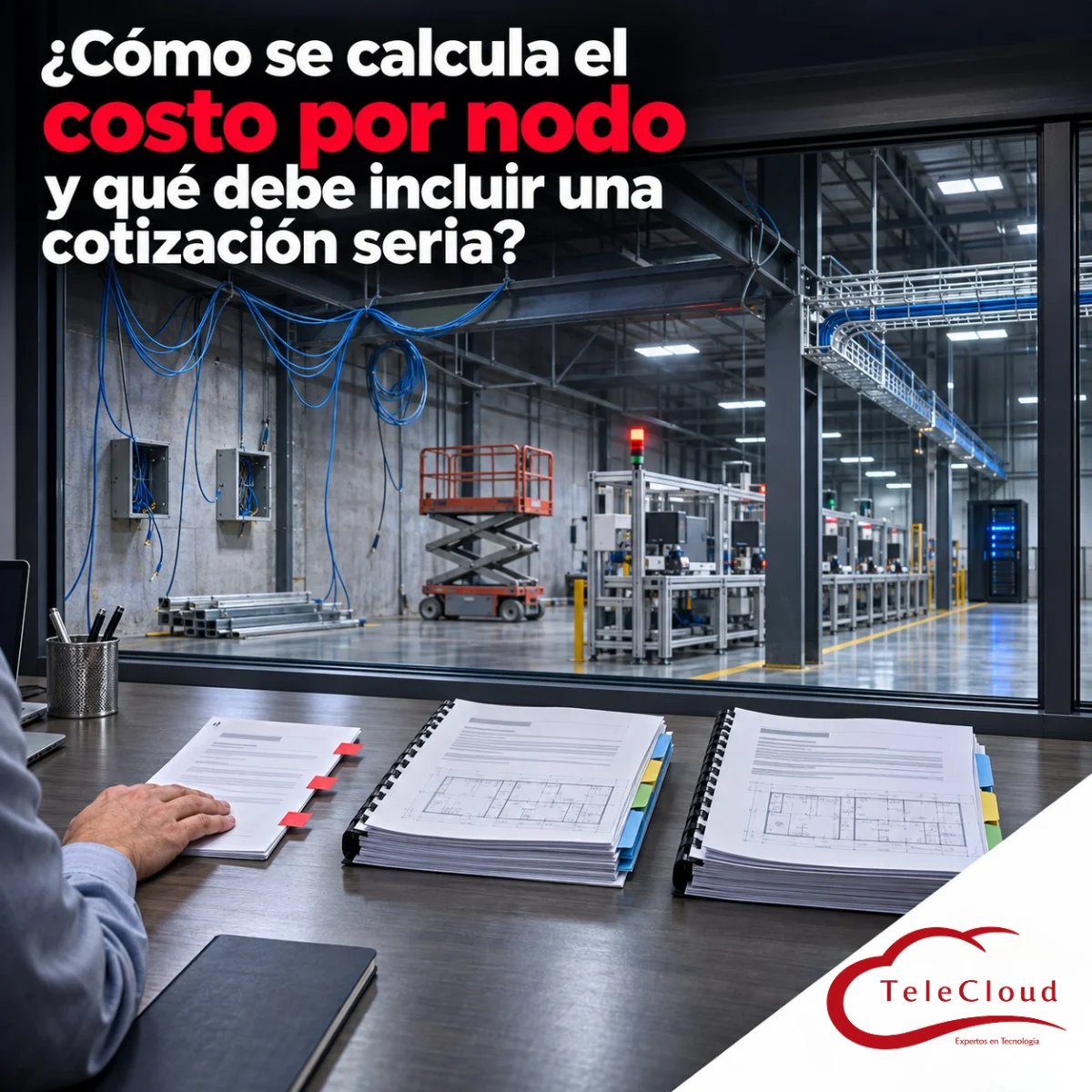
The plant manager receives three quotes to cable the new assembly area, with about one hundred twenty workstations. All three talk about drops, all three cite the cable category, and one of them costs quite a bit less than the other two. Purchasing picks it, the contractor starts on Monday and for the first few weeks everything moves forward. The problems arrive with the first extra invoice: the pathways were not included, the patch cords were not either, and the drop to each cell was quoted as if the building were an office with short hallways. At the end of the job, the integrator hands over drops that light up but are not certified, and the plant's automotive customer asks for the test reports of every link during its audit. Another contractor has to be hired to certify, and a third of the links fail because of poorly made terminations. Once the extras, the corrections and the weeks of delay are added up, the cheap quote turns out to be the most expensive of the three. The drop was never the same product in the three documents.
Cost per drop adds up cable, outlet, panel, terminations, cords, pathways and labor. It also includes certification and documentation. Two quotes can only be compared with the same line items, site survey and cable category.
Why the cheapest quote ends up being the most expensive
In structured cabling, the price per drop has become the figure used to compare providers. It turns an entire project into a single number, and for that same reason it is the figure that misleads the most. Two integrators can quote the same drawing with very different prices per drop and neither one is lying: each included different things inside that number.
Whatever is not written down gets billed later
A quote that leaves out pathways, patch cords, patch panels or labor at height looks cheaper until the job begins. Each missing item comes back as an extra, negotiated under the pressure of a line waiting for the cabling to start up. Extras are rarely priced the way they would have been in the original project, because there is no competition anymore.
Different materials under the same name
A Category 6A drop with cable, jacks and patch panel from a single manufacturer, backed by a system warranty, costs more than a drop assembled from loose components of different origins. Both are called a Category 6A drop in the quote. The difference shows up in certification, in performance with power over the network cable and in who answers when a link fails two years later.
Drops that light up and do not certify
A link that turns on its light at the switch can be outside the TIA-568 standard because of crosstalk, insertion loss or length. Certification with a calibrated tester is the only step that proves it, and it is also the first one cut from a tight quote. A project without certification delivers a network that works today and guarantees nothing for tomorrow or for a customer audit.
What a drop is and what makes up its cost
A drop is a complete link between the work area outlet and the patch panel port in the rack, with everything needed for a device to connect and for the link to meet the standard. Calculating its cost requires breaking down each part.
Cable, outlet and patch panel
The first component is the horizontal cable, whose cost depends on the category, the shielding and the average link length in that project. At the work area end goes the jack, the faceplate or the surface box, and in the rack, the patch panel port that receives the cable. All three must be the same category; a lower-category jack turns the entire link into a link of that category.
Terminations and cords
Each drop has two terminations, one at each end, made by hand with a tool by a technician. The quality of that work decides whether the link certifies. Added to them are the two patch cords, the one in the work area and the one in the rack, which are part of the channel the standard measures. Quotes that exclude the cords leave the customer buying on its own a component that affects channel certification.
Pathways and support
The tray, conduit, raceway and surface raceway that carry the cable from the rack to the outlet are the item that varies most between an office and an industrial building. In an office with a drop ceiling, the pathway cost per drop is small. In a building with conduit drops to every cell, tray ten meters up and aisle crossings, the pathways can be worth as much as the cable and the labor combined. A per-drop quote that does not detail them is quoting a different job.
Labor and average distance
Labor includes pulling cable, terminating, installing pathways and testing. Its cost depends on the average link length, the working height, the hours when the building can be worked on and whether the job requires platforms, work-at-height permits or night windows. Two projects with the same number of drops can require twice the hours if one has long links at height and the other has short links at floor level.
Certification and documentation
The last component is testing every link with a calibrated certifier, the individual report per drop, labeling according to TIA-606 and the final drawing with routes and ports. These deliverables turn the installation into a manageable asset, and they are what a customer's audit will ask for. They represent a small part of the cost per drop and are the first cut in a quote that competes on price alone.
Why two per-drop quotes are not comparable
To compare two quotes, both need to respond to the same conditions. In practice they almost never do, and the price difference reflects differences in scope that the buyer discovers later.
Different site surveys
An integrator who walked the building knows the average cable length per link, how many conduit drops there are and how high the tray runs. Another who quoted from a PDF drawing assumed office distances. The second price will be lower and it will be wrong. Average length is the variable that moves the cost of cable and labor the most, and it can only be known on site.
Category, shielding and warranty
A quote in Category 6 and another in 6A describe two different projects, even though both say drop. The same goes for unshielded cable versus shielded cable for areas with interference, or for components from a system with a manufacturer warranty versus loose components. Before comparing prices, it pays to match those three variables, because each one justifies a difference in cost and performance.
What a serious quote should include
A serious quote is recognizable because it leaves few open questions. It describes how the information was gathered, what will be installed, how it will be tested and what is excluded. With that breakdown by line item, you can add and subtract until you reach a common baseline between providers.
On-site survey and reference drawing
The document states the date of the walkthrough, the number of drops per area, the estimated average length, the location of the rack or zone enclosures and the proposed pathway routes on a drawing. Without a survey, the quote is an estimate that the provider will adjust during the job.
Bill of materials with category, model and quantity
Each component appears with its category, model, quantity and unit: meters of cable, jacks, patch panels, cords by length, meters of tray and conduit, boxes, supports and accessories. That list makes it possible to verify that what was installed matches what was quoted, and it is the basis of the manufacturer's warranty.
Labor, schedules and building conditions
The quote clarifies whether the work is done during production hours or in night and weekend windows, whether it includes platforms and work-at-height permits, and who provides power, access and a safety escort. Each of those conditions changes the labor hours, and leaving them undefined is the most common source of extras.
Testing, certification and deliverables
The document states that every link is certified with calibrated equipment in accordance with TIA-568, that a report is delivered per drop, that labeling follows TIA-606 and that the customer receives final drawings with routes, racks and ports. It also defines the installation warranty and, when applicable, the component manufacturer's system warranty.
Exclusions and validity
An honest quote says what it does not include: civil works, electrical power for the rack, active equipment, cooling for the telecom room or removal of old cable. That list keeps the buyer from assuming everything is included and makes it possible to request those items from the same provider or another one, with time to spare. Price validity and payment terms close the document.
How we quote a cabling project at TeleCloud
At TeleCloud we quote after walking the plant. We survey the number of drops per area, measure real distances, review pathway routes, working height and conditions of dust, moisture and vibration, and agree on intervention windows with production. With that information we build a breakdown by line item, so you can compare our proposal with any other on the same basis.
We install with our own engineers under TIA/EIA standards, certify every link with calibrated equipment and deliver a report per drop, labeling according to TIA-606 and final drawings. When the project requires it, we include the telecom room design, power backup and grounding, so the budget reflects the complete job from the start.
If you are comparing cabling quotes and the prices per drop look nothing alike, each document most likely describes a different job. At TeleCloud we quote with an on-site survey, a breakdown by line item, certification of every link and complete documentation, under TIA/EIA standards, so you can compare on the same basis and avoid extras during the job. Request a diagnosis of your network and we will deliver a quote broken down by line item.
Frequently asked questions
Is it valid to ask for a price per drop to compare providers?
Yes, as long as every provider quotes on the same site survey, the same cable category and the same scope for pathways, cords, certification and documentation. With those variables matched, the price per drop becomes comparable. Without them, the lowest number is usually the one that left out the most items.
What happens if the quote excludes certification?
The network can work and still have links outside the standard that fail under heavy traffic or with power over the network cable. Also, without certification reports there is no manufacturer system warranty, and a customer audit can reject the installation. It is worth requiring certification within the price, never as an option.
Why is the price per drop higher in an industrial building than in an office?
Because the average link is longer, the pathways call for tray at height and conduit drops, the job requires platforms and permits, and the intervention windows depend on production. The drop carries more material and more hours, even when the cable category is the same.
Do you need a network diagnosis?
The TeleCloud team evaluates your current infrastructure and proposes solutions adapted to your industrial operation.
Schedule free diagnosis