
How to Select a Certified Technology Integrator: What You Should Demand Before Hiring
A certified technology integrator holds valid manufacturer certifications, proven experience, and defined support after installation, well beyond simply installing equipment. Here's what to demand before signing.
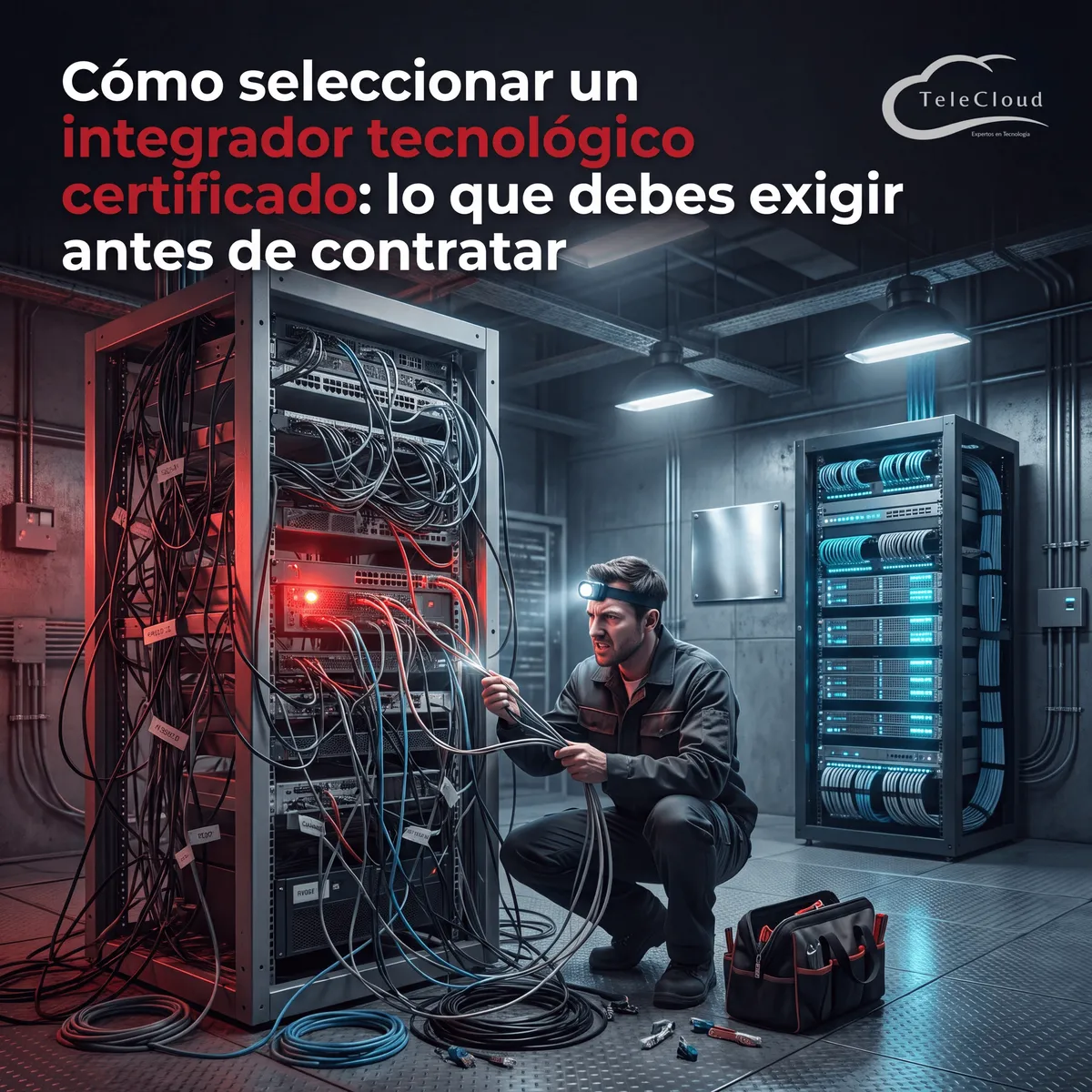
The systems manager at a manufacturing plant hired the integrator that offered the lowest price to renovate the plant's network. Six months later, the network showed intermittent outages that no one from the original provider could diagnose, because whoever installed the cabling and configured the equipment never held a real certification from the manufacturers involved. The company had to hire a second provider just to diagnose what the first one had left misconfigured, doubling the cost of a project that should have been solved once.
A certified technology integrator holds valid certifications from the manufacturers it represents, proven experience on projects similar to yours, and a defined support process after installation, well beyond simply installing equipment.
Why choosing on price alone without verifying certification costs more later
The lowest price on a technology infrastructure quote rarely reflects the real quality difference between integrators. More often, it reflects the absence of certification, experience, or post-installation support in the quoted cost.
An installation with no real certification can fail in ways no one knows how to diagnose
An integrator with no valid certification can install equipment that looks functional at first glance, but without the deep advanced-configuration knowledge a manufacturer-certified technician actually has. When something fails beyond the basics, that integrator lacks the ability to diagnose the problem with the same depth as someone certified.
The cost of hiring a second provider to fix the first one
When the first integrator can't resolve a failure, the company ends up hiring a second provider just to diagnose and fix what the first one left misconfigured. That second contract doubles the cost of a project that should have been solved once, on top of the operational time lost while the network or system fails. In sectors like manufacturing, banking, or healthcare, that unstable network time translates directly into stopped production, interrupted transactions, or operational risk that no cheap quote makes up for.
What certifications you should demand before signing
An integrator's certification is evidence that the provider was evaluated and approved directly by the manufacturer of the equipment it's going to install, far beyond a simple administrative formality.
Valid certification from the manufacturers it's going to install
Ask for evidence of valid, not expired, certification from the specific manufacturers whose equipment will be installed in your project: Cisco, Fortinet, Avaya, Huawei, or others depending on your case. An expired certification indicates the provider may have been certified in the past, but it does not confirm their knowledge is current with today's versions and protocols.
The difference between an equipment reseller and a certified integrator
A reseller can sell you the right equipment without having the technical ability to configure it, integrate it with your existing infrastructure, and provide specialized support afterward. A certified integrator combines the sale with the complete technical capability of the cycle: design, installation, configuration, and support.
What proven experience you should ask for before hiring
Certification confirms technical knowledge. Proven experience confirms that knowledge was successfully applied under real conditions similar to yours.
Previous projects in your same sector or of similar complexity
Ask for references from previous projects in your same sector, or at least of complexity similar to your plant or installation. An integrator experienced in corporate offices doesn't necessarily have the specific experience an industrial plant's infrastructure demands under more demanding environmental conditions.
Years of continuous operation, not just the brand's age
Verify that the years of operation a provider advertises correspond to real continuous operation with a stable technical team, not just how long the brand has been registered. A provider with more than twenty years of continuous operation has built experience against scenarios a newer provider hasn't faced yet, from infrequent failures to regulatory changes that require updating already-installed infrastructure.
What support you should demand after installation
The project doesn't end on installation day. Ongoing support matters as much as the installation itself for your company's operational continuity.
A documented SLA, not a verbal promise of fast response
Demand a written SLA specifying response and resolution times for a failure, not just a verbal promise of fast attention. A documented SLA is enforceable; a verbal promise isn't, when a critical failure actually happens.
Certified support available, not just a generic contact number
Confirm that post-installation support is provided by personnel certified on the installed equipment, not a generic call center that can only log the report and escalate it. When a failure affects your operation, you need someone capable of resolving it, not just recording it.
How to verify in practice what a provider claims in their proposal
Much of the above can be verified before signing, without relying solely on what the provider states in their own commercial proposal.
Check the manufacturer's public portal to confirm certification
Most network, cybersecurity, and telephony equipment manufacturers maintain a public portal where you can verify a partner or integrator's certification status by name or certification number. That step takes minutes and removes any doubt about whether the certification shown in the proposal is still valid.
Ask to speak directly with a client from a similar project
A written reference confirms the project existed; a direct call with that client lets you ask specifically how the provider handled an unexpected issue, something no reference written by the provider itself is going to volunteer.
At TeleCloud we have more than twenty years of continuous operation and valid Cisco, Fortinet, Avaya, and Huawei certifications, with a documented SLA and certified support available for your plant or installation.
Frequently asked questions
Is a more expensive integrator always better than a cheaper one?
Not necessarily, but a price well below the rest of the market usually reflects the absence of certification, experience, or post-installation support in the cost. Compare quotes by demanding evidence of those three elements, not just the final number.
Which certifications matter most for industrial infrastructure?
It depends on the specific equipment in your project, but certifications from manufacturers like Cisco, Fortinet, Avaya, and Huawei are common reference points for networking, cybersecurity, and telephony in industrial environments in Mexico.
How do I verify that the certifications a provider shows are real and current?
Most manufacturers have public portals where you can verify a partner or integrator's certification status by name or certification number. Ask for that information directly and confirm it before signing.
Do you need a network diagnosis?
The TeleCloud team evaluates your current infrastructure and proposes solutions adapted to your industrial operation.
Schedule free diagnosis