What Types of Fiber Optic Cable Are There, and Which One Withstands an Industrial Environment?
Fiber is single-mode or multimode, in tight-buffered, loose-tube or armored cable. A plant needs loose-tube or breakout cable, with armor and jacket.
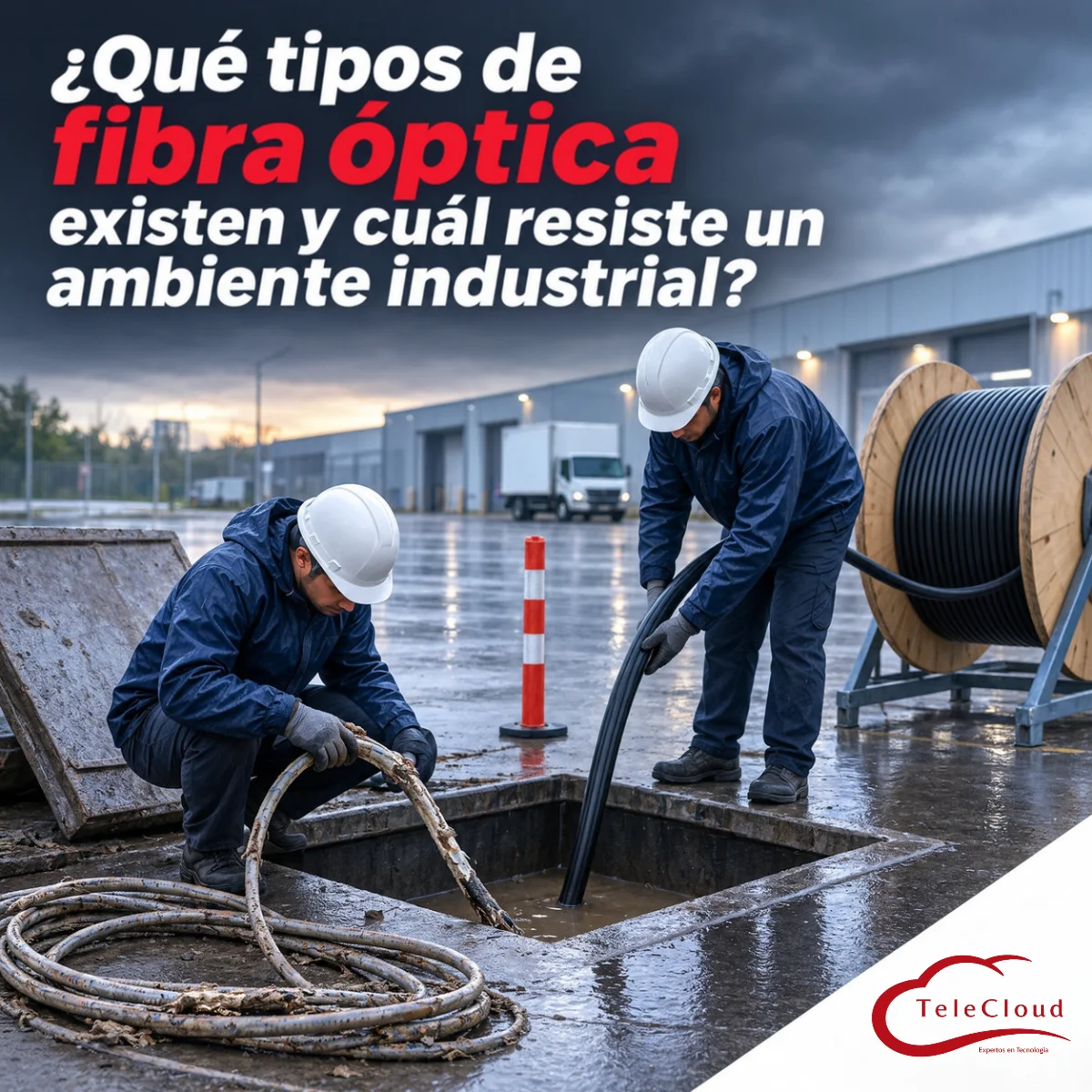
The plant expanded its finished goods warehouse into a separate building, about two hundred meters from the equipment room. To connect it, the contractor pulled an indoor fiber cable through the underground duct that already crossed the yard. It was the same cable used inside the offices: thin, flexible and easy to terminate. Throughout the dry season, the link ran without a single alarm. With the first rains, the duct filled with water and the cable stayed submerged for weeks. One night, the link began dropping packets and then went down completely. The shipping scales and the warehouse terminals were left without a system, and the first shift's trucks left with handwritten delivery notes. When they opened the handhole, the maintenance team found the jacket chewed by rodents and water inside the cable. The repair required pulling a new cable, with a different construction, along the entire route.
Why the same glass fails in one cable and holds up in another
Every fiber optic cable carries glass strands 125 microns in diameter at its center, protected by a 250 micron primary coating. The difference between single-mode and multimode fiber lies in the core of that glass, and it determines the distance and speed of each link. The cable construction determines something else: how much tension, water, heat, oil, impact and fire the glass can withstand before it fails.
A glass strand handles tension along its axis well and fractures easily under a tight bend, crushing or a bite. The cable exists to keep all of that away from the fiber. That is why two cables with the same single-mode fiber can last months or decades on the same route, depending on the construction chosen.
The two constructions that decide where the cable can run
Fiber cables fall into two families according to how they protect each strand. One is designed for dry indoor spaces and the other for outdoor backbones.
Tight-buffered construction, flexible and easy to terminate
In a tight-buffered cable, each strand carries a second plastic layer bonded to the coating, bringing it to 900 microns. That layer makes the fiber easier to handle and allows the connector to be installed directly on it. This construction is used for patch cords and for the distribution cables that run through offices, equipment rooms and dry cable trays. Its reinforced version, called breakout, wraps each strand in its own subcable with strength members and better withstands the rough handling of a production building.
Its limits are tension and water. The strand is fixed inside the cable, so any pull, temperature change or crushing reaches it directly. Except for models with dry water blocking for short outdoor runs, these cables lack moisture protection, and outside a dry environment water travels through their interior.
Loose tube, fiber isolated from tension and water
In a loose-tube cable, the strands travel loose inside thin plastic tubes, with up to twelve fibers per tube. The tubes are wound around a central strength member and surrounded by aramid yarn and an outer jacket. Because the fiber floats inside the tube, pulling tension and thermal expansion fall on the strength members, and the glass stays free of stress.
The tubes are filled with gel or with dry materials that absorb water and stop it. That is why loose tube is the construction for outdoor backbones: underground ducts, aerial runs between buildings and direct burial. Its drawback is termination. Each strand requires a fan-out kit or a splice to a short cable with a factory connector, called a pigtail, and the gel must be cleaned off carefully before work begins.
The layers that separate the fiber from a harsh environment
Layers are added over either construction according to the risk along the route. Each one responds to a specific threat in the plant.
Strength members, the aramid that absorbs the pull
Aramid yarns surround the fiber and absorb the force of the installation pull. This material withstands tension without stretching, so it keeps the fiber from being strained inside the cable. The cable is always pulled by those members, never by the jacket or the fiber, and never beyond the maximum tension stated on the manufacturer's data sheet.
Armor, protection against crushing and rodents
Armor is a corrugated metal layer, placed between two jackets, that protects the cable against crushing, impact and rodent bites. It is specified for direct burial, shared ducts and under-floor runs with forklift traffic. Metal armor conducts electricity, so it must be bonded and grounded at each end and at every splice closure.
Near substations, large variable frequency drives or high-voltage lines, a fully dielectric cable, with no metal parts, is the better choice. Its rodent protection comes from fiberglass strength members or special tapes, and the cable keeps the fiber's immunity to electrical noise.
Water blocking, gel or dry tape
Water inside the cable reduces the strength of the glass over the years and makes fractures more likely at points under tension. Water blocking stops it with gel inside the tubes or with tapes and powders that swell on contact with water. Gel protects well and requires cleaning at every termination. The dry version speeds up splicing.
The jacket, the layer that defines the environment the cable withstands
The outer jacket is the cable's first line of defense and is chosen according to the route. Black polyethylene resists moisture and solar radiation, and it is the jacket used on outdoor cables. Inside buildings, the cable needs a flame-retardant jacket. Where people work in enclosed spaces, a low smoke zero halogen jacket, known as LSZH, reduces toxic fumes in case of fire.
In areas with cutting oil, coolants or constant abrasion, a polyurethane jacket performs better than standard polyvinyl chloride (PVC). Indoor-outdoor cables combine two jackets: an outer polyethylene jacket, removed where the cable enters the building, and an inner flame-retardant jacket. With them, a single piece crosses the yard and reaches the equipment room without an intermediate splice.
Which cable withstands each area of an industrial plant
A single backbone crosses different environments. That is why we specify the cable section by section, using these six areas as a reference:
Offices, equipment room and telecom rooms: tight-buffered cable with a flame-retardant or LSZH jacket, in dry trays and with no mechanical stress.
Production floor with trays above machinery: reinforced tight-buffered cable or indoor-outdoor cable, with an oil-resistant jacket where there is splashing, and kept apart from power circuits.
Washdown, chemical or food areas: loose-tube cable with water blocking, a jacket resistant to the agent present, and termination inside sealed enclosures.
Underground ducts between buildings: loose-tube cable with water blocking and a polyethylene jacket, with armor if the duct is shared or has a history of rodents.
Aerial runs between buildings: self-supporting cable or cable lashed to a messenger wire, with a jacket resistant to solar radiation and the metal parts grounded.
Furnace, foundry or radiant heat areas: cable with a jacket rated for the temperature of the area, a route kept away from the heat source, and metal raceway.
Every change of environment along a route forces a decision between a cable that withstands every section and a transition with a splice at a protected point. In a plant with several buildings, indoor-outdoor cable solves most cases. The type of pathway completes the protection, because the best cable fails on a route that crushes it or runs it alongside electrical power.
Three specification mistakes that shorten the life of a backbone
We review fiber backbones that failed early, and these three mistakes come up again and again:
Using indoor cable in an outdoor duct. An underground duct collects water even if it looks dry on the day of the work, and a cable without water blocking absorbs it for years until the link fails.
Installing armored cable without grounding the armor. Floating metal armor carries surges and induced currents all the way to the equipment room, putting people and active equipment at risk.
Pulling the cable by the jacket or with tight bends. The glass ends up strained or with microcracks, the link passes the first measurement, and loss increases with every cycle of temperature and vibration.
All three mistakes share one cause: the cable was bought by fiber type and nobody reviewed the environment of each section. Fixing them later costs a downtime window, a new cable and, in underground ducts, civil works.
How we specify the fiber cable for your plant at TeleCloud
At TeleCloud we start every fiber project with a route survey. We measure the actual distances between buildings, review the existing handholes and mark where the fiber can run without damage. With that walkthrough, we assign each section its cable construction, its jacket and its protection against water, impact and rodents.
The backbone runs through its own trays, ducts and handholes, separated from electrical power, and is installed with spare strands from day one. During the fiber optic installation, we control the pulling tension and the bend radius required by the manufacturer, terminate each strand in a labeled optical distribution frame (ODF) and certify each link with test instruments. Our own certified engineers back that work with more than 20 years of experience in infrastructure for businesses.
If your plant is going to connect a new building or replace a backbone that has already failed, the cable construction defines how many years that link will last. At TeleCloud we specify the cable section by section, with a route survey, dedicated raceways and certification of every link. Request a diagnosis of your network and we will review every fiber route with you before you buy the cable.
Frequently asked questions
Can I use the same fiber cable inside and outside the buildings?
Yes, with an indoor-outdoor cable. Its outer polyethylene jacket resists the moisture and sun of the yard, and it is removed where the cable enters the building to leave a flame-retardant jacket. With that construction, the backbone runs from the handhole to the equipment room without intermediate splices.
When do you need armored cable?
When the cable is directly buried, shares a duct with other cables, crosses areas with rodents or runs under floors with forklift traffic. Armor protects against crushing and bites, and it is grounded at each end. If the route runs near high-voltage equipment, a dielectric cable with non-metallic rodent protection is the better choice.
How do I know what construction my installed fiber has?
The legend printed on the jacket indicates the number of strands, the fiber type and the jacket rating. If the route crosses wet areas, open a handhole and check the condition of the cable. A test with an optical time domain reflectometer (OTDR) shows whether any section is already accumulating loss.
Do you need a network diagnosis?
The TeleCloud team evaluates your current infrastructure and proposes solutions adapted to your industrial operation.
Schedule free diagnosis